Skip to content
Mold Removal Palm Beach County

Serving all of Palm Beach County

Mold Removal Palm Beach County

Inspection, Testing & Remediation Services

Professional mold inspection, testing and remediation for homes, condos and businesses from Jupiter to Boca Raton and out to the Glades. We find the moisture first, remove the growth under containment, and verify the result before anything is rebuilt.

  • Moisture source found first
  • HEPA containment
  • Clearance before rebuild
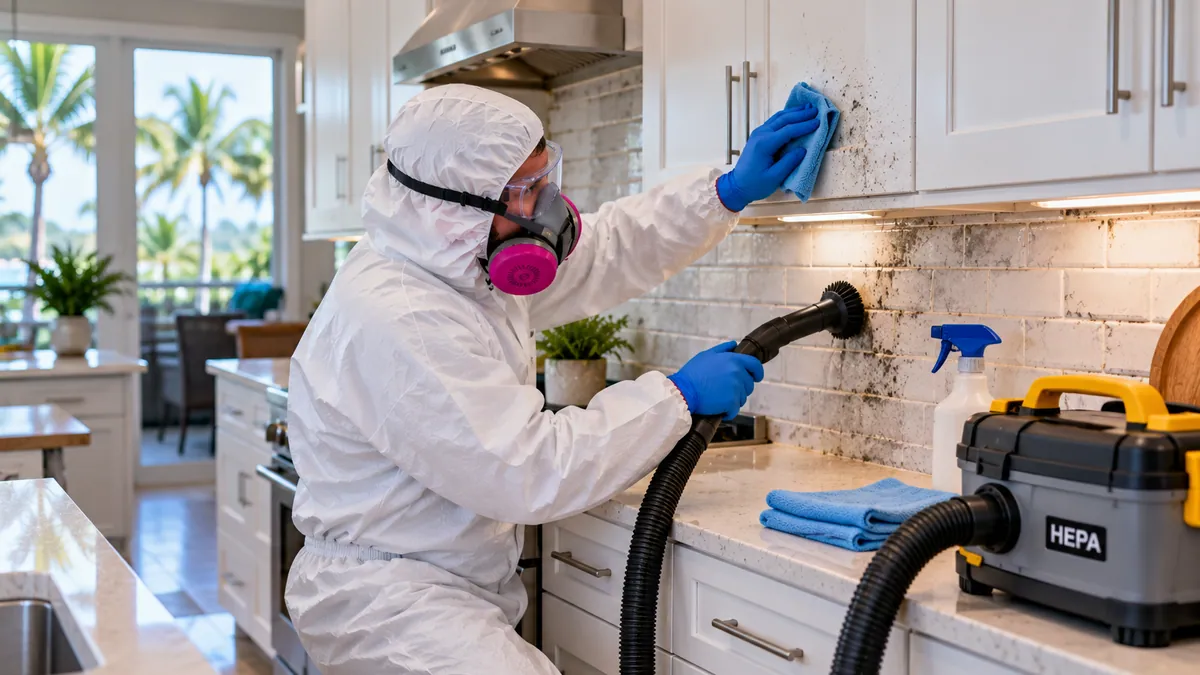
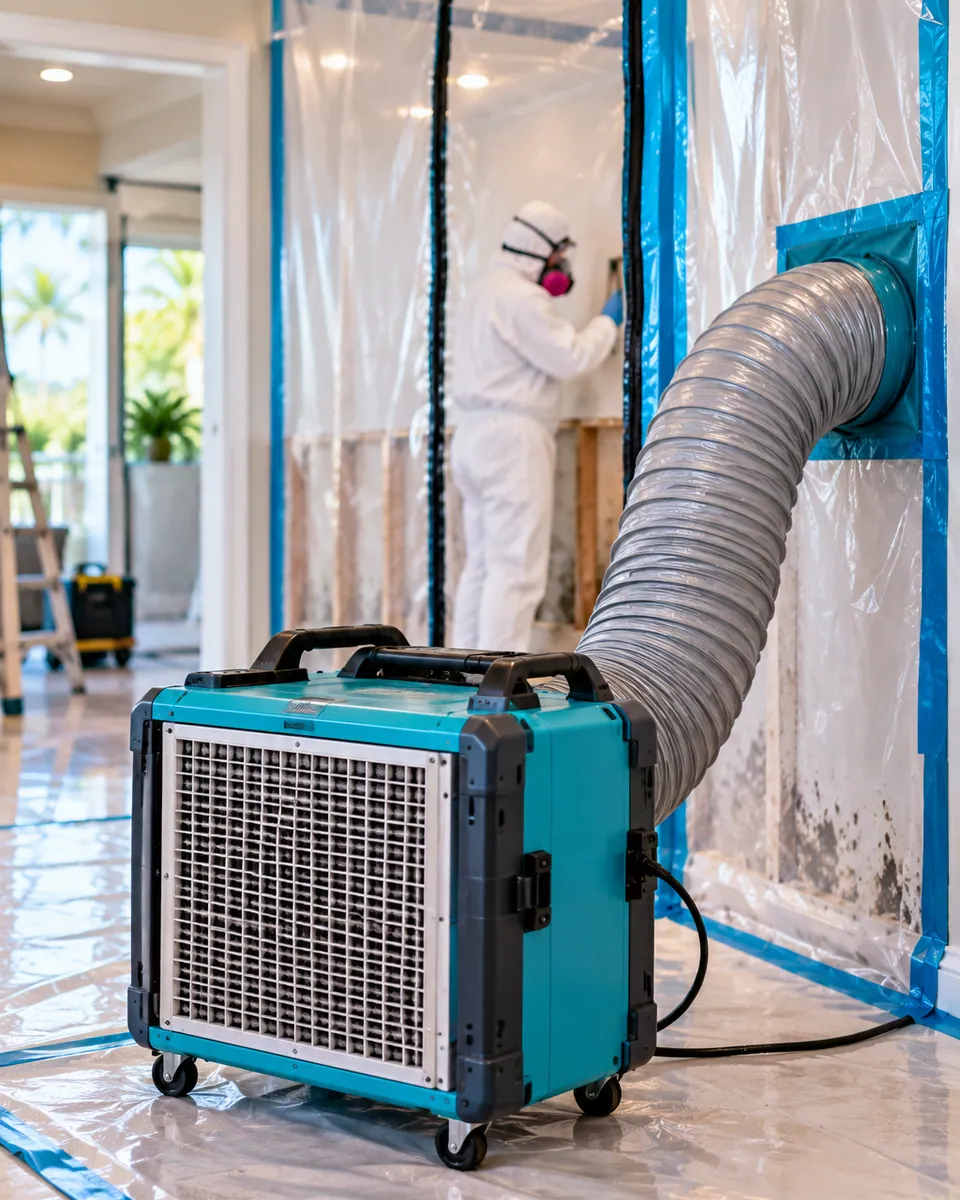
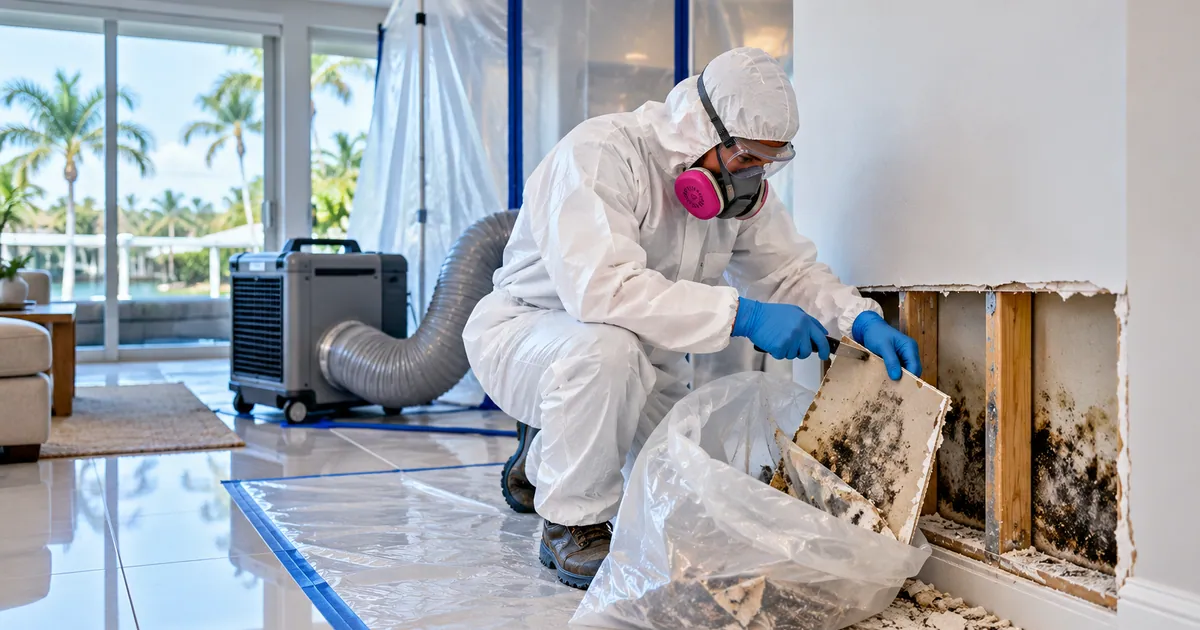
Mold Removal in Palm Beach County — technician removing mold under containment
Demo-free option
When materials can be cleaned in place
Indoor RH target 30–50%

Mold risk climbs above 60%

What are you dealing with?

Pick the closest match — we'll point you to the right first step.

Start with the source, not the spot

If visible growth covers more than about 10 square feet, or it returns after cleaning, plan on professional remediation. A musty smell with nothing visible usually means a hidden source — inside a wall, an AC closet, under a sink or in the attic.

Recommended first step

  • Mold Inspection and Testing
  • Mold Remediation
Talk it through — (954) 758-4980

Mold by the numbers

  • 24–48 hrs

    Mold can start

    on wet drywall, wood or carpet after a leak

  • <60 % RH

    Indoor humidity

    keep it lower — ideally 30–50% — to stop growth

  • 99.97 %

    HEPA capture

    of 0.3 µm airborne particles, including spores

  • >10 sq ft

    Licensed work

    Florida requires a licensed mold remediator above this

Our mold services

Mold removal for every room & every stage

Nine specialized services covering every stage — from finding hidden moisture to rebuilding after clearance. Select a service to see the warning signs and exactly how we handle it.

(954) 758-4980
Mold Inspection and Testing in Palm Beach County Assess

Mold Inspection and Testing

A moisture-led visual inspection plus air and surface sampling that tells you whether mold is present, what kind, how much, and — most importantly — where the water is coming from.

Signs you need it

  • A musty or earthy smell with no visible growth
  • Recent leak, AC overflow, roof or window intrusion
  • Allergy-like symptoms that ease when you leave the house
  • Buying, selling or renting a property and need documentation

How we handle it

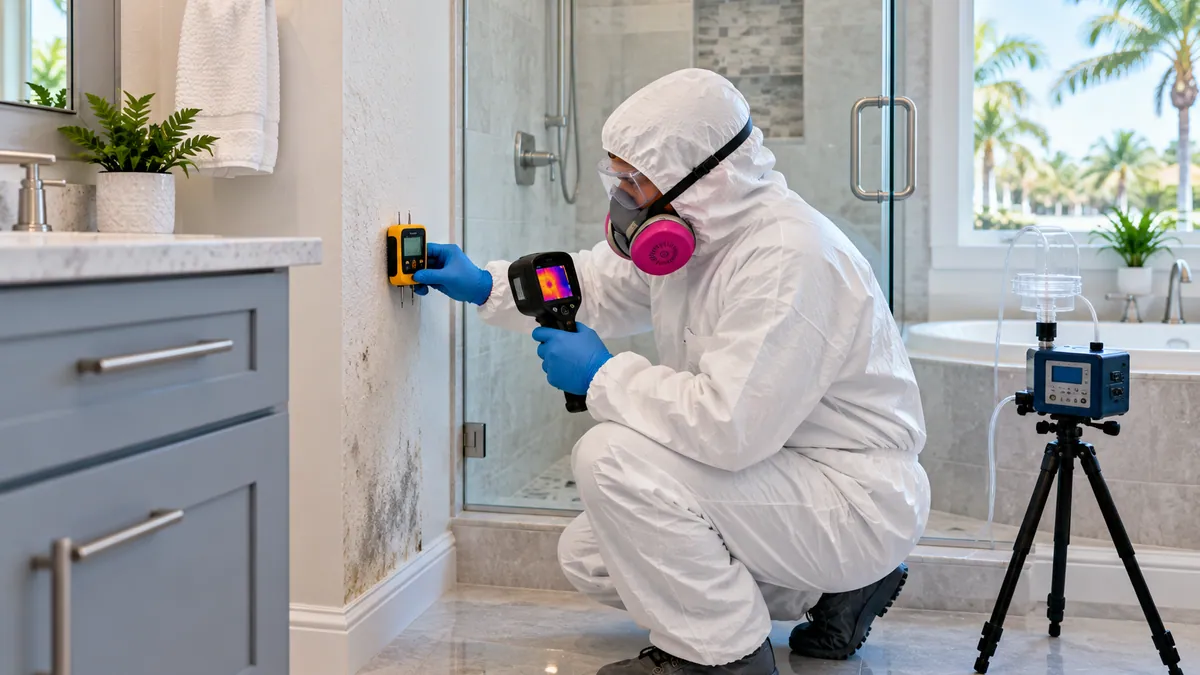
  1. 1Moisture mapping with meters and thermal imaging to find wet materials hidden behind finishes
  2. 2Air samples indoors compared against an outdoor baseline, plus swab or tape-lift samples where growth is suspected
  3. 3Accredited-lab analysis and a written report with photos, readings and a clear remediation scope
More about mold inspection and testingShow less

Testing is not about proving mold exists — in South Florida some spores are always in the air. The goal is to compare indoor conditions with outdoor conditions, identify any indoor amplification, and pinpoint the moisture source driving it. Under Florida law (Chapter 468, Part XVI), mold assessment and mold remediation are separately licensed activities, and an assessor may not remediate a structure they assessed within the previous 12 months. Ask any provider how they keep testing independent from the cleanup quote.

Best for

HomeownersHome buyers & sellersLandlords & tenantsCondo associations

Questions about mold inspection and testing?

Call (954) 758-4980
Mold Remediation in Palm Beach County Remediate

Mold Remediation

Full-scope professional mold remediation: containment, HEPA air filtration, removal of contaminated materials, cleaning of salvageable surfaces and drying — following the IICRC S520 standard of care.

Signs you need it

  • Visible growth larger than about 10 square feet
  • Mold that keeps returning after surface cleaning
  • Growth inside walls, cabinets, ductwork or ceilings
  • A lab report that shows indoor spore amplification

How we handle it

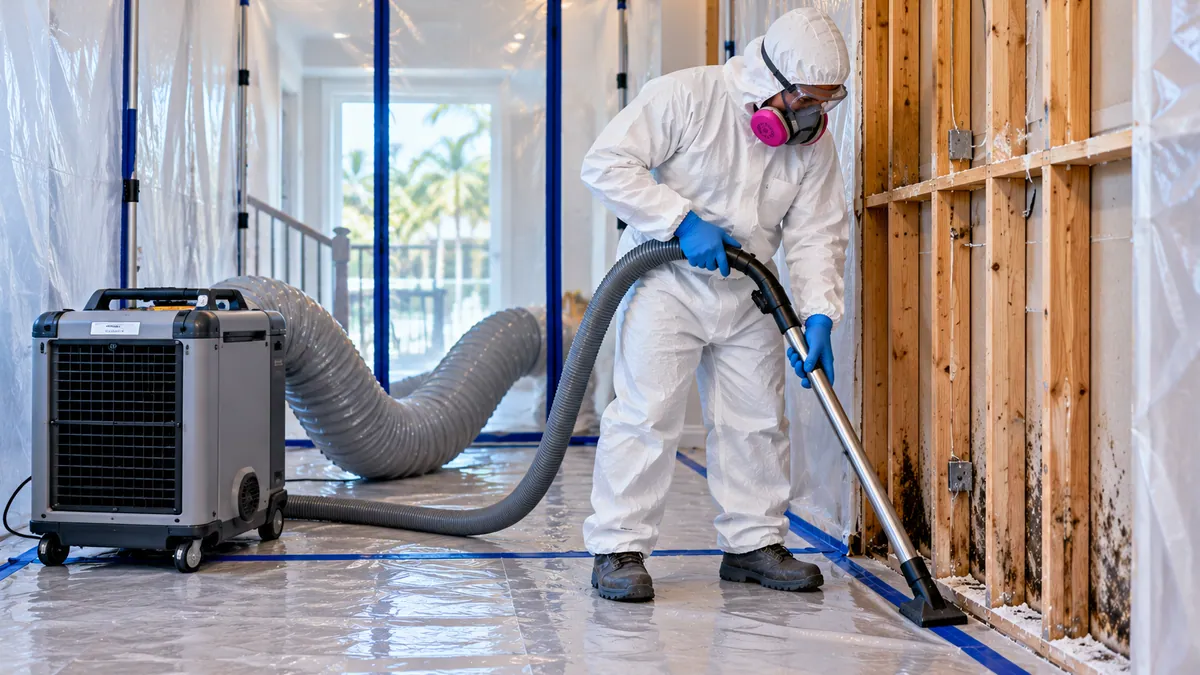
  1. 1Seal the work area with poly containment and negative air pressure so spores do not spread to clean rooms
  2. 2Remove porous materials that cannot be saved; HEPA-vacuum, clean and treat structural surfaces
  3. 3Dry to target moisture levels, then verify with post-remediation clearance before rebuilding
More about mold remediationShow less

Remediation means removing mold, not painting over it. Killing mold with bleach leaves allergenic material behind, and sealing it with paint traps the problem under a fresh surface. Professional work physically removes contamination under containment, fixes or documents the moisture source, and ends with clearance verification so you know the space is back to normal conditions before drywall and paint go back up.

Best for

Single-family homesCondos & townhomesRental propertiesOffices & retail

Questions about mold remediation?

Call (954) 758-4980
Black Mold Removal in Palm Beach County Remediate

Black Mold Removal

Careful, contained removal of dark mold colonies — including Stachybotrys chartarum — from drywall, baseboards, cabinetry and other cellulose materials that stayed wet for days.

Signs you need it

  • Dark green, gray or black patches on drywall or wood
  • Slimy or sooty growth after a slow leak or flood
  • Staining that bleeds through fresh paint
  • Growth behind baseboards, under sinks or behind the washer

How we handle it

  1. 1Lab confirmation where it matters — color alone cannot identify a species
  2. 2Full containment with HEPA negative air before any material is disturbed
  3. 3Bag-and-remove affected drywall and insulation, HEPA-clean framing, dry and clear
More about black mold removalShow less

"Black mold" usually refers to Stachybotrys chartarum, a slow-growing mold that needs materials like drywall paper to stay wet for an extended period. Many other molds are also dark, so testing is the only way to know what you have. Any large or recurring dark growth should be removed under containment because disturbing it dry releases spores and fragments into the air.

Best for

Post-leak bathrooms & kitchensFlooded roomsLaundry & utility areasClosets on exterior walls

Questions about black mold removal?

Call (954) 758-4980
Crawl Space Mold Removal in Palm Beach County By area

Crawl Space Mold Removal

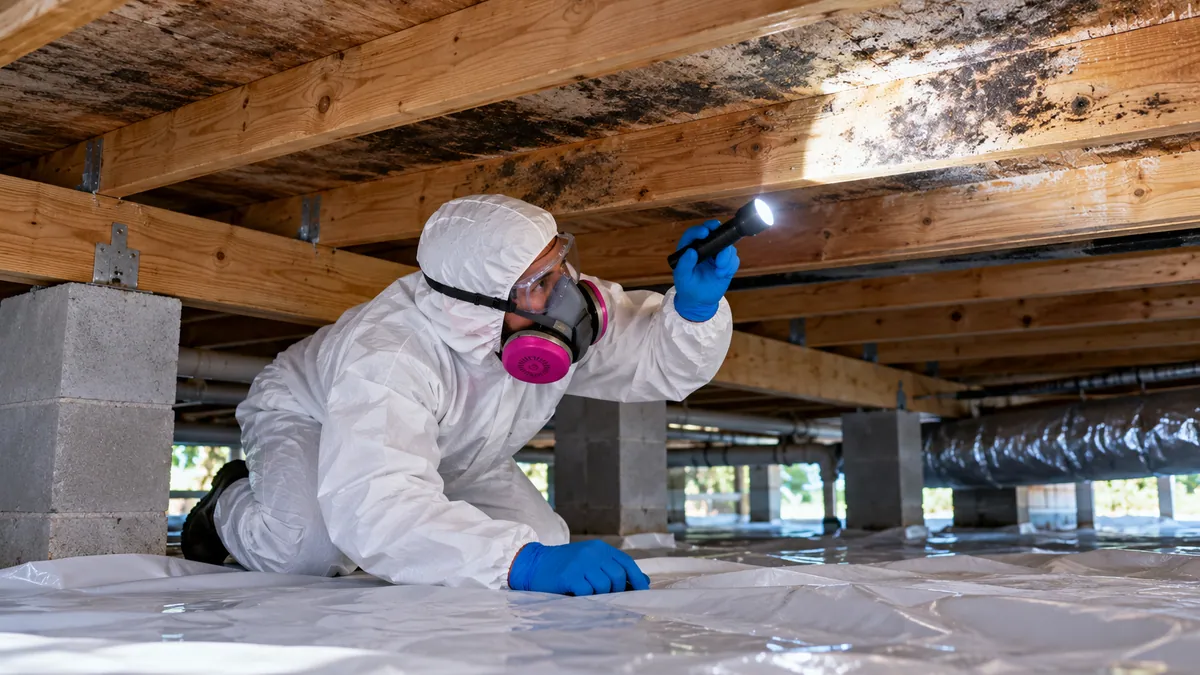
Mold removal for raised wood-frame homes: cleaning joists, subfloor and sill plates, removing wet debris, and correcting ventilation, drainage and vapor control so growth does not return.

Signs you need it

  • Soft, spongy or cupping wood floors
  • Musty odor strongest on the ground floor
  • White, fuzzy or dark growth on joists and subfloor
  • Standing water or wet soil under the house after rain

How we handle it

  1. 1Inspect joists, beams and subfloor moisture; check vents, grading and plumbing leaks
  2. 2HEPA-vacuum, scrub and treat framing; remove contaminated insulation and debris
  3. 3Recommend the right moisture fix — drainage, vapor barrier, vent correction or encapsulation
More about crawl space mold removalShow less

Most Palm Beach County homes sit on a concrete slab, but many older raised homes in historic neighborhoods have a crawl space under a wood floor. In our humid climate, that space can hold damp air all summer. Cleaning the wood without fixing water and humidity under the house only buys time, so every crawl space job ends with a moisture-control recommendation.

Best for

Historic & raised homesOlder wood-frame bungalowsHomes near canals & lakesAdditions on pier foundations

Questions about crawl space mold removal?

Call (954) 758-4980
Attic Mold Removal in Palm Beach County By area

Attic Mold Removal

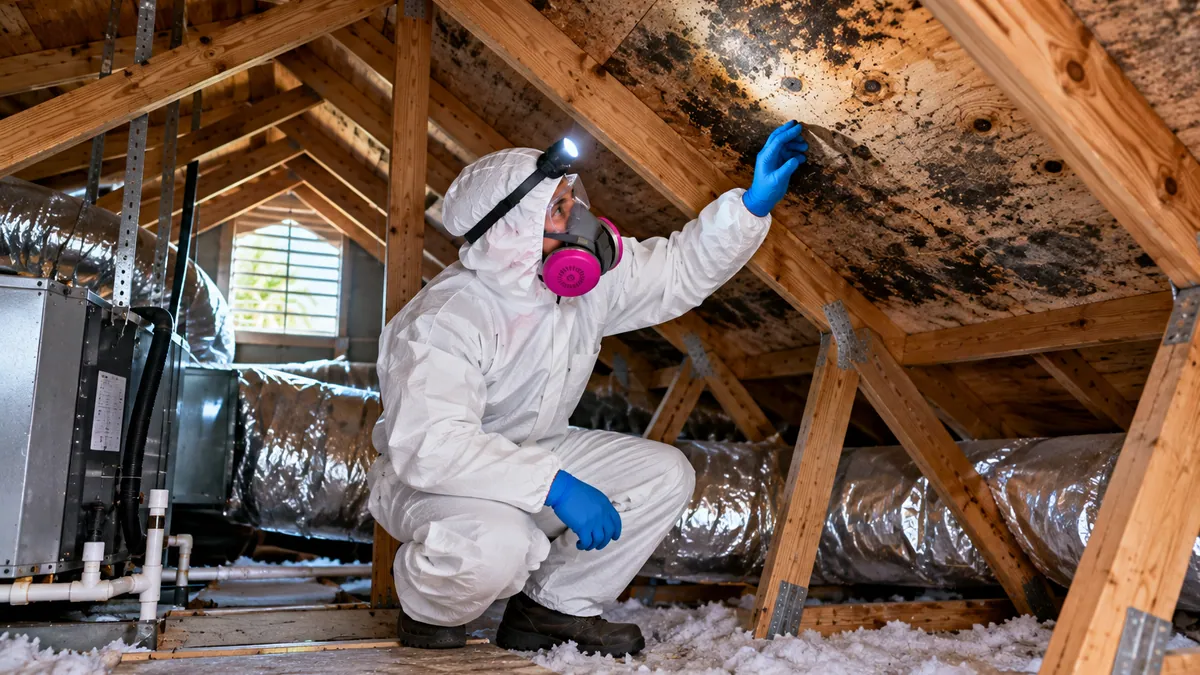
Removal of mold from roof decking, trusses and insulation caused by roof leaks, sweating AC ducts, disconnected bath fans or poor attic ventilation.

Signs you need it

  • Dark staining on the underside of roof sheathing
  • Damp or matted insulation around AC ducts and air handlers
  • Ceiling stains below the attic after storms
  • Bathroom or dryer vents that end in the attic instead of outside

How we handle it

  1. 1Trace the source: roof penetrations, condensation on ducts, vents and soffit airflow
  2. 2HEPA-sand or media-clean affected decking and framing; remove wet insulation
  3. 3Correct venting and duct insulation, then re-insulate once the attic tests clear
More about attic mold removalShow less

Florida attics are hot, but they are also humid, and cold AC ductwork running through that air can sweat enough to soak insulation and framing. Hurricane-season roof damage adds another source. Attic mold is often invisible from the living space until it shows up as a ceiling stain, so an attic check is part of every whole-home inspection we recommend.

Best for

Homes with attic AC handlersAfter roof leaks or stormsOlder roofs & re-roofsTownhomes with shared attics

Questions about attic mold removal?

Call (954) 758-4980
Basement Mold Removal in Palm Beach County By area

Basement Mold Removal

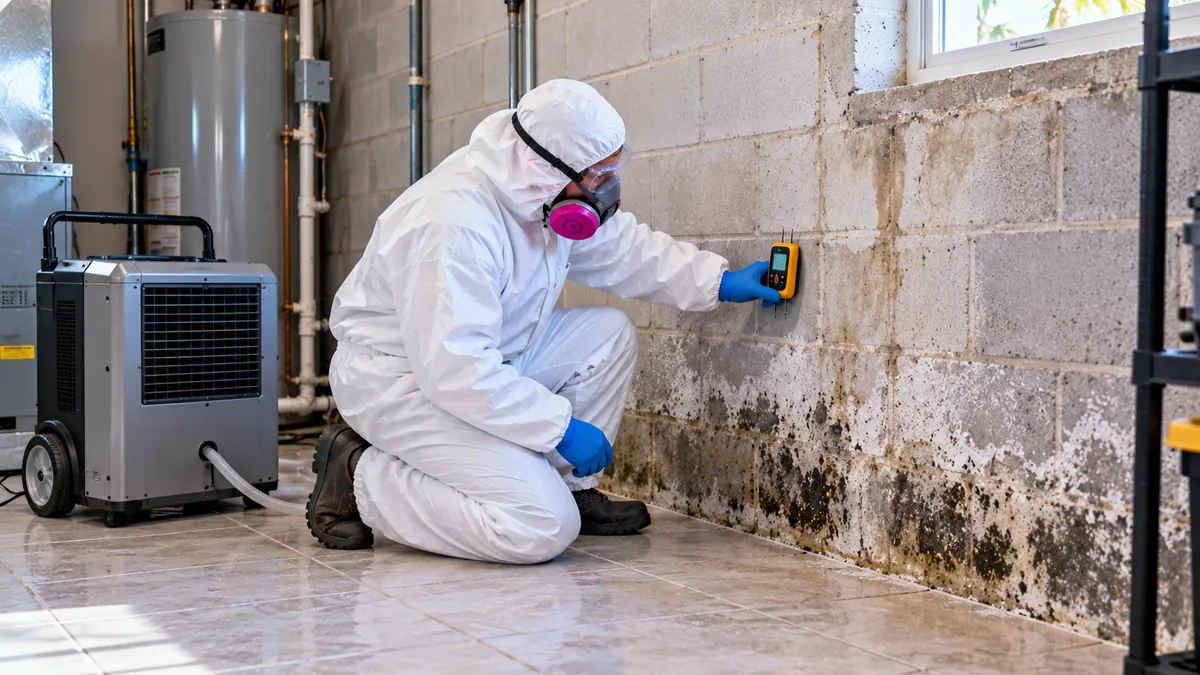
Mold removal for below-grade and ground-level spaces — the rare true basement, sunken rooms, below-grade storage, garages and lower-level condo units that stay damp.

Signs you need it

  • Efflorescence (white crust) or damp patches on block walls
  • Musty storage rooms, closets or garages
  • Mold on carpet tack strip or the back of furniture against walls
  • Water intrusion where grade slopes toward the building

How we handle it

  1. 1Measure wall and slab moisture and identify intrusion points
  2. 2Remove affected finishes and contents, HEPA-clean concrete and block surfaces
  3. 3Dehumidify, then recommend drainage, sealing or humidity control to keep it dry
More about basement mold removalShow less

Because of the high water table, true basements are uncommon in Palm Beach County — but below-grade and ground-level spaces still trap moisture. Sunken living rooms, storage rooms carved into slopes, parking-level storage and ground-floor condo units against wet soil all behave like basements, and they get the same treatment: find the water, remove the growth, and control humidity.

Best for

Ground-floor condosSunken rooms & storageGarages & workshopsCommercial lower levels

Questions about basement mold removal?

Call (954) 758-4980
Home & Residential Mold Removal in Palm Beach County Remediate

Home & Residential Mold Removal

Whole-home mold removal for houses, condos, townhomes and rentals — bathrooms, kitchens, closets, AC closets, windows and walls — planned around the people who live there.

Signs you need it

  • Mold around AC closets, supply vents or window frames
  • Growth inside sink cabinets or behind toilets
  • Musty closets on exterior walls
  • Mold on furniture, shoes or clothing in closed rooms

How we handle it

  1. 1Room-by-room plan that keeps the rest of the home usable during work
  2. 2Containment, HEPA filtration and removal sized to the affected area
  3. 3Practical prevention: humidity targets, AC maintenance and leak checks
More about home & residential mold removalShow less

Most residential mold in South Florida traces back to three things: plumbing leaks, AC systems that cannot control humidity, and water getting in around windows and roofs. A good residential job treats the household, not just the wall — protecting kids, pets and belongings, keeping clean rooms clean, and leaving you with a short list of habits that keep indoor humidity in check.

Best for

Families with kids & petsCondo & HOA ownersLandlords & property managersSeasonal residents

Questions about home & residential mold removal?

Call (954) 758-4980
Demo-Free Mold Removal in Palm Beach County Remediate

Demo-Free Mold Removal

Non-demolition mold removal for surface and early-stage growth on non-porous and semi-porous materials — cleaning in place instead of tearing out walls, when the materials allow it.

Signs you need it

  • Surface growth on tile, glass, sealed wood or metal
  • Early growth caught quickly after a minor leak
  • Mold on framing that is dry and structurally sound
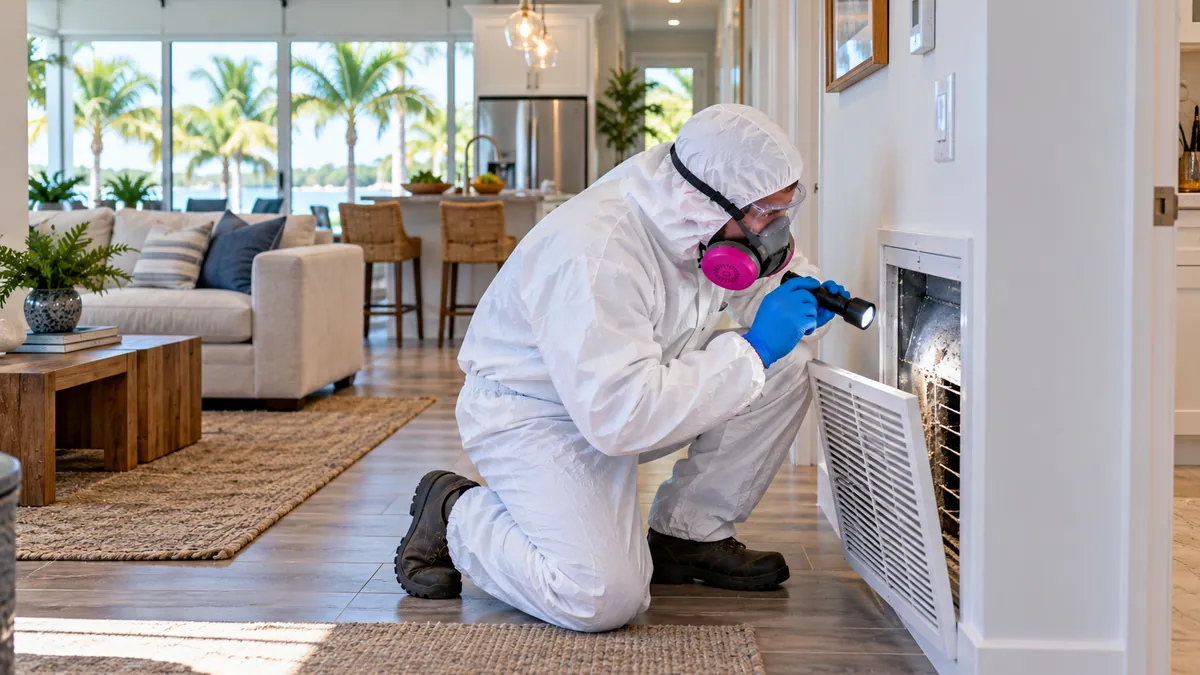
  • Mold on HVAC registers, cabinets or trim that can be cleaned

How we handle it

  1. 1Confirm with moisture readings that materials are dry and sound
  2. 2HEPA vacuuming, damp-wiping and approved antimicrobial cleaning in place
  3. 3Fogging only as a supplement — never as a substitute for physical removal
More about demo-free mold removalShow less

Demo-free (non-demo) removal is a real option, not a sales gimmick, but it has limits. Hard and sealed surfaces can usually be cleaned in place. Drywall, insulation and carpet that stayed wet long enough to grow mold through generally cannot. An honest inspection tells you which parts of your job qualify for demo-free cleaning and which materials truly need to come out — so you avoid both unnecessary tear-out and half-finished work.

Best for

Minor or early growthFinished rooms you want to keepCabinetry, tile & trimBudget-conscious repairs

Questions about demo-free mold removal?

Call (954) 758-4980
Mold Damage Restoration in Palm Beach County Restore

Mold Damage Restoration

Putting the space back together after remediation — drywall, insulation, baseboards, paint and flooring — once clearance confirms the area is clean and dry.

Signs you need it

  • Walls or ceilings opened during remediation
  • Water-damaged flooring or cabinetry removed
  • Insulation pulled from attic or walls
  • Need for documentation to support an insurance claim

How we handle it

  1. 1Rebuild only after moisture readings and clearance confirm the area is ready
  2. 2Mold-resistant materials where they make sense: paperless drywall, sealed trims
  3. 3Photo documentation from start to finish for your records and insurer
More about mold damage restorationShow less

Restoration is the step that turns a contained work zone back into a room. Rebuilding too early — before materials are dry and the area has passed clearance — is one of the most common reasons mold comes back. Sequencing remediation, verification and rebuild in the right order is what makes the result last.

Best for

After water damageInsurance-related repairsPre-sale repairsRental turnovers

Questions about mold damage restoration?

Call (954) 758-4980

How it works

Mold removal in four clear steps

Four steps, the same order every time — because skipping one is how mold comes back.

Step 1 of 4

Call & consult

We ask the questions that matter — recent leaks, AC behavior, how long the smell has been there, who lives in the home — and tell you honestly whether your Palm Beach County property needs testing, removal, or neither.

What you get

  • A straight answer on what to do first
  • A scheduled visit that suits you
  • No obligation

Countywide mold removal

Mold Removal Built Around South Florida's Humidity

Palm Beach County does not have a mold problem because homes are dirty. It has one because the air outside is warm and wet for most of the year, and every leak, sweating duct or closed-up summer home gives that moisture a place to settle.

Mold needs three things: a food source like drywall paper, wood or dust, the right temperature, and moisture. In our climate the first two are almost always present, so moisture is the only lever that really matters. That is why every job we do starts with moisture mapping and ends with a dry, verified space — not with a spray bottle and a coat of paint.

Read moreShow less

The county's housing covers almost every risk profile you can think of: oceanfront condos on the barrier islands that take wind-driven rain, 1920s cottages and raised wood-frame homes in older neighborhoods with crawl spaces underneath, master-planned communities in the western suburbs with lakes and irrigation, and agricultural towns along Lake Okeechobee where muck soils and flooding keep humidity high. Seasonal residents add another pattern: homes closed up for the summer with the AC set too high often come back to musty air and growth on furniture, closets and cabinets.

Our service list is built around those patterns. We handle mold inspection and testing, full mold remediation, black mold removal, attic mold from sweating ducts and roof leaks, crawl space mold under raised floors, below-grade and ground-floor spaces that behave like basements, whole-home residential work, demo-free cleaning for surfaces that can be saved, and restoration once the area passes clearance.

Mold is stressful because it is hard to see the whole problem. Our job is to make it visible: what is growing, why it is growing, what has to come out, what can stay, and what keeps it from coming back. Call for a straight answer and a clear scope before any work begins.

  • Coastal & barrier-island condos Wind-driven rain, aging window seals and shared plumbing stacks move water between units and into walls you cannot see.
  • Older raised & frame homes Historic neighborhoods still have wood floors over crawl spaces that hold damp air through the wet season.
  • Seasonal & closed-up homes Summer months with the AC off or set high push indoor humidity past the point where mold grows on furniture and closets.
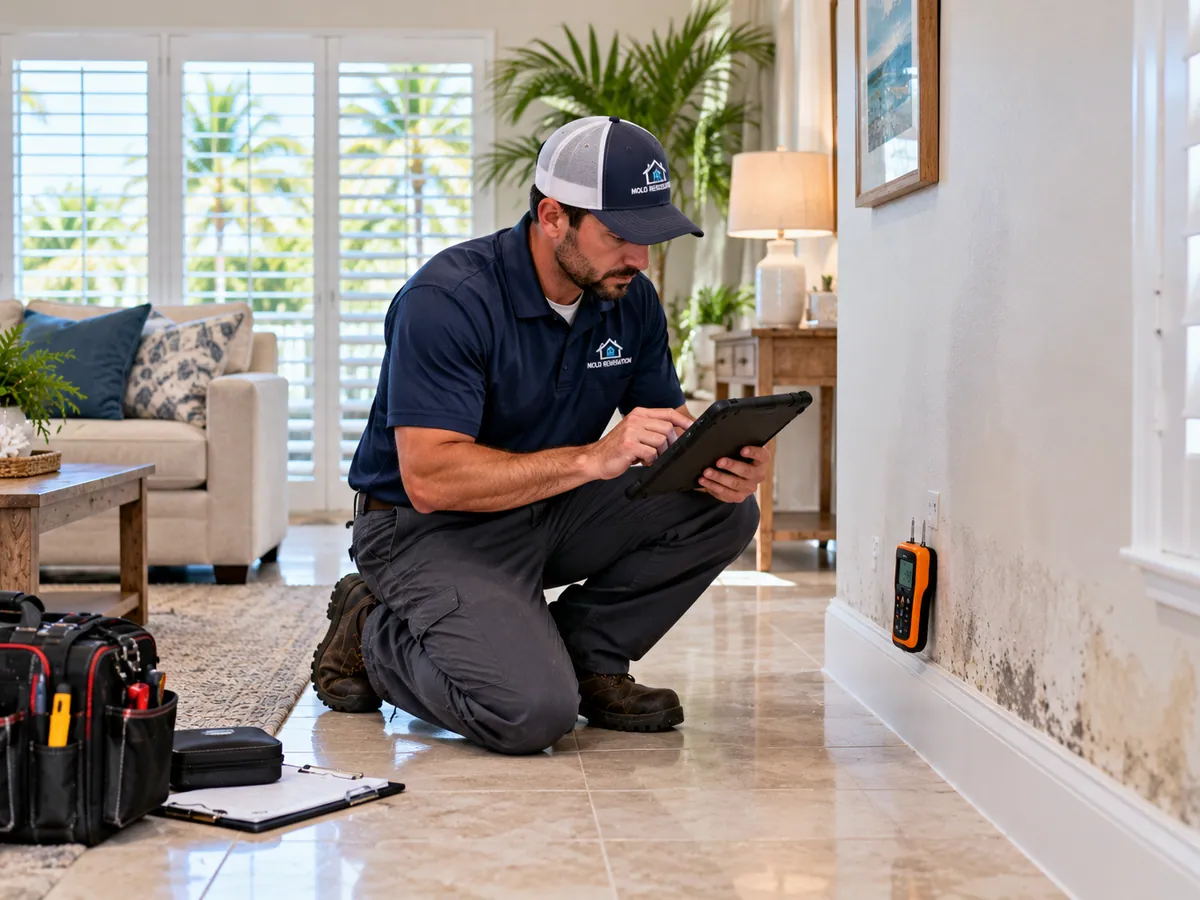
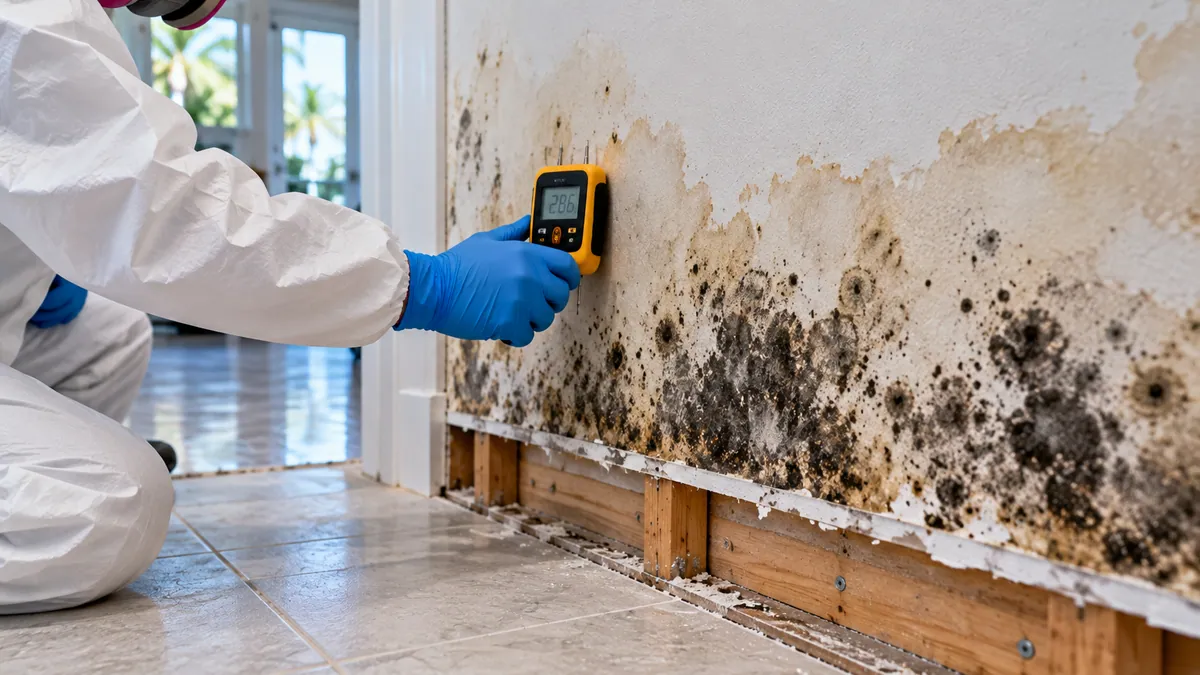
Mold remediation technician checking moisture levels in a Palm Beach County home
39
Municipalities, plus unincorporated communities
5
Regions: North, Central, South, Western, Glades
9
Specialized mold services

Mold prevention

Checklist for Palm Beach County property owners

Small habits that keep moisture — and regrowth — under control between professional visits.

  • 01 Keep indoor humidity below 60% (30–50% is ideal) — South Florida air rarely does it for you.
  • 02 Clear AC condensate lines and change filters on schedule; poor ventilation and sweating ducts feed attic mold.
  • 03 Dry any leak, spill or storm intrusion within 24–48 hours, before damp materials grow mold.
  • 04 Seasonal residents: leave the AC set to control humidity and have the home checked after storms.

Local resources: Palm Beach County: official website (opens in a new tab)Palm Beach County Office of Emergency Management (opens in a new tab)

Mold guide

Understand mold before you hire

Straight answers before you spend a dollar. Pick a topic — everything you need to understand mold in a Palm Beach County property, on one page.

How to tell if you have a mold problem

The most reliable early sign is smell — a musty, earthy odor that is strongest when a room has been closed up or right after the AC starts. Visible signs of mold growth include spotting or fuzzy patches on grout, window frames, AC vents and closet walls, staining that bleeds through paint, and paint or wallpaper that bubbles and peels.

Read moreShow less

Less obvious clues: warped baseboards, soft drywall near the floor, condensation on windows or supply registers, rust on metal items stored in closets, and allergy-like symptoms that ease when you leave the house. Mold spores are common allergens: the U.S. Environmental Protection Agency (EPA) notes they can trigger allergic reactions, asthma attacks and respiratory irritation in sensitive people, so anyone affected should talk to a doctor. In Palm Beach County homes, the places to check first are the AC closet and air handler, under kitchen and bathroom sinks, behind the washer, closets on exterior walls, and ceilings below an attic air handler.

Common indoor molds in South Florida homes

Color alone cannot identify a mold — only a lab can. These are the types most often found in water-damaged buildings; some can produce mycotoxins, which is one more reason growth is removed under containment rather than scraped or sprayed. Anyone with asthma, allergies or a weakened immune system should talk to a doctor about exposure.

How mold remediation works: containment, HEPA filtration and removal
Stachybotrys chartarum ("black mold")

Needs materials like drywall paper or wood to stay wet for an extended period. Usually dark green to black and slimy when active; most often found behind walls and under floors after leaks or flooding.

Aspergillus

One of the most common indoor molds, with many species and colors. Grows on a wide range of damp materials and is frequently found in HVAC dust and on walls with ongoing humidity.

Penicillium

Blue-green and fast-spreading on water-damaged materials such as carpet, wallpaper and insulation. Often responsible for a strong musty odor.

Cladosporium

Olive-green to black and very common outdoors. Indoors it appears on fabrics, wood, window sills and AC supply registers where surfaces stay cool and damp.

Chaetomium

Grows on drywall and wood with long-term water damage. Starts white and darkens over time, with a distinctly musty smell.

Not sure what you are looking at?Describe it on the phone — (954) 758-4980

Why choose us

Removed properly. Verified before we leave.

Good mold work is mostly honest diagnosis and careful sequencing. Here is what you can expect on every job.

Our standard on every job

  • Moisture source found and documented before removal
  • Written scope: what must go, what can be cleaned in place
  • Containment and HEPA filtration on every removal
  • Demo-free cleaning wherever materials allow
  • Clearance verification before anything is rebuilt
  • Plain-English reports for insurers, buyers and tenants
(954) 758-4980

Who we help

  • Homeowners & families
  • Condo associations & HOAs
  • Landlords & property managers
  • Seasonal residents
  • Buyers, sellers & agents
  • Offices, retail & restaurants
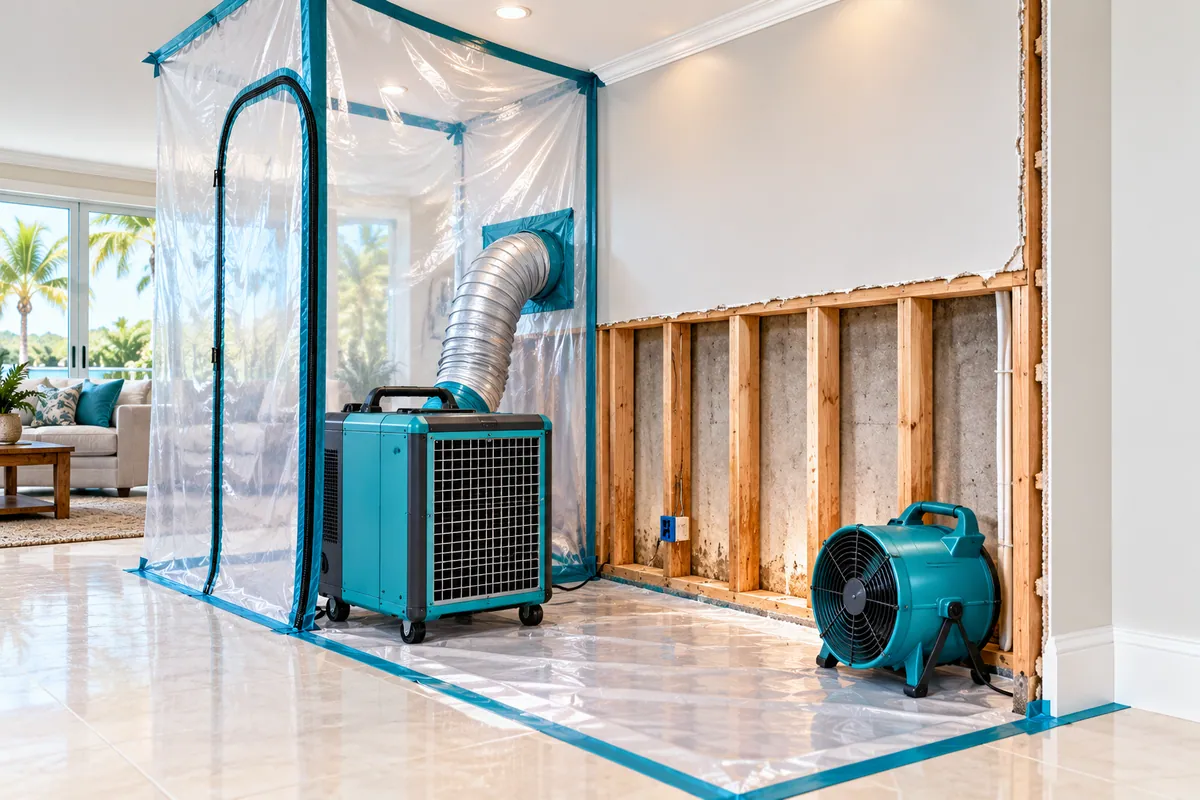
HEPA air scrubber and poly containment set up for mold remediation in Palm Beach County
Negative air containment
keeps clean rooms clean

Honest about demolition

If a surface can be cleaned in place, we say so. Tear-out is reserved for materials that truly cannot be saved — and if you do not need remediation at all, we tell you that too.

Talk to a mold specialist

Ready for a mold-free home in Palm Beach County?

One call gets you a clear first step — inspection, testing, removal or simple advice. No pressure and no obligation.

Have this ready when you call

  • Where you see or smell it, and for how long
  • Any recent leaks, storms or AC problems
  • Photos, if you have them
  • Whether anyone in the home has health concerns

Phones answered 7 days a week

FAQ

Frequently asked questions

Questions we hear most often about mold removal in Palm Beach County.

How do I know if I need mold inspection or mold removal first?

If you can see growth larger than about 10 square feet, or it keeps coming back, you will need remediation — but a moisture-led inspection still comes first so the scope is right. If you only smell mustiness, had a recent leak, or have symptoms that ease when you leave the house, start with inspection and testing to find out whether there is a hidden source.

Is mold removal different from mold remediation?

In everyday speech they mean the same thing. Technically, remediation is the full process: containment, removing contaminated materials, cleaning, drying and verifying the area is back to normal conditions. Simply spraying or killing mold is not remediation, because dead mold is still allergenic and the moisture source is still there.

Do I need a licensed company for mold work in Florida?

Florida licenses mold assessors and mold remediators separately under Chapter 468, Part XVI of the Florida Statutes, and the licensing applies to jobs involving more than 10 square feet of mold. The same law prevents an assessor from remediating a structure they assessed within the previous 12 months, which keeps testing independent from the cleanup.

Can mold be removed without tearing out walls?

Sometimes. Surface growth on tile, sealed wood, metal and other non-porous materials can usually be cleaned in place, which is what demo-free mold removal means. Drywall, insulation and carpet that stayed wet long enough to grow mold through generally need to be removed. The inspection tells you which parts of your job qualify.

How long does mold remediation take?

A single bathroom or closet is often finished in one to three days, including drying. Larger jobs that involve several rooms, attics or crawl spaces can take longer, especially if drying or a moisture repair has to happen before cleaning can be verified. Rebuilding starts only after the area passes clearance.

Why does mold keep coming back in my Palm Beach County home?

Almost always because the moisture source was never fixed. The most common culprits here are AC systems that cool but do not dehumidify, condensate line clogs, slow plumbing leaks, window and roof intrusion, and closed-up homes during summer. Removing growth without correcting humidity only resets the clock.

Does homeowners insurance cover mold removal in Florida?

It depends on the policy and the cause. Many Florida policies limit or cap mold coverage, and coverage is more likely when the mold resulted from a sudden covered water event than from long-term humidity or maintenance issues. Photograph damage early, keep your inspection report, and talk to your insurer before work begins.

Still have a question? Call (954) 758-4980

Service areas

Serving all of Palm Beach County

Mold inspection, testing and remediation for 40 communities — from the barrier islands between the Atlantic Ocean and the Intracoastal Waterway to the Western Communities and the Glades along Lake Okeechobee.

Privacy

Loading…

Terms

Loading…

Call Now — (954) 758-4980